
Description
I. Product name
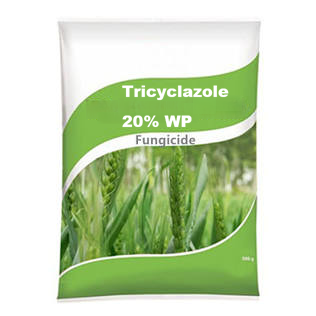
Tricyclazole 20% WP
II. Active Ingredients and Mechanism of Action
active ingredient
Tricyclazole 20%
mechanism of action
Tricyclazole belongs toSystemic triazole fungicides (protective, specific fungicides for rice blast control)... It exerts its effect primarily by inhibiting the biosynthesis of melanin in pathogenic bacteria.
Its core mechanism of action is as follows:
- Inhibiting the formation of attachment structures and infection structures of the rice blast fungus
- Inhibits the melanin synthesis pathway (by affecting key enzymes such as polyacetyl-reductase)
- Prevent pathogens from penetrating the plant's epidermal cells
- Combines protective and therapeutic effects
Since the rice blast fungus relies on melanin to form infection spines during the infection process, triazole effectively prevents the onset and spread of the disease through “breakpoint inhibition.”
III. Product characteristics
- Highly focused: Highly effective against rice blast, with a clearly defined target
- Good systemic translocation: Can be absorbed and transported by rice roots, stems, and leaves
- Longer duration of effectiveness: Provides good protection against both leaf blight and ear blight
- Outstanding preventive effects: For use before or at the early stages of disease onset
- Relatively safe: Highly safe for crops when used at the recommended rate
- Formulation Stability: 20% wettable powder, with good dispersibility and adhesion
IV. Suitable Crops and Target Pests
Applicable crops
- maize
prevention and treatment target
- Rice Blight (Leaf Blight, Node Blight, Panicle Blight)
V. Dosage and Administration
Recommended Usage (for reference)
- Control of Leaf Blight:
- Use 20% wettable powder 40–60 grams per mu, mix with 30–50 kilograms of water and spray Prevention and Control of Ear-Neck Blight:
Apply the pesticide once 7–10 days before heading and once at the full-head stage
Dosage 50–80 grams per mu, Mix with water and spray evenly. Directions for Use
- Spray evenly onto the leaves, focusing on the middle and upper leaves.
- It is recommended to use a fine mist spray to improve adhesion.
VI. Usage Guidelines and Precautions
Best Time to Use
- Before or in the early stages of disease onset (with a focus on prevention)
- The period from the tillering stage to the heading stage is the critical window for pest control.
- To control ear and neck blight, it is essential to apply two key rounds of pesticide treatment: “before the first ears emerge” and “at the full-ear stage.”
Recommendations for Use
- It is recommended to rotate this product with other fungicides that have different modes of action to delay the development of resistance.
- Can be mixed appropriately with certain protective fungicides to enhance overall control efficacy
- Maintain good ventilation and light penetration in the field; this will yield even better results when combined with proper cultivation practices.
Important Notes
- Avoid applying the pesticide during periods of high temperatures and strong sunlight.
- It is not recommended to increase the dosage of medication without medical advice.
- If rain occurs within 4 hours of application, a follow-up spray is required.
- Wear protective gear when using this product to avoid skin and eye contact with the solution.
- Strictly comply with local regulations regarding pesticide safety intervals


Reviews
There are no reviews yet.