
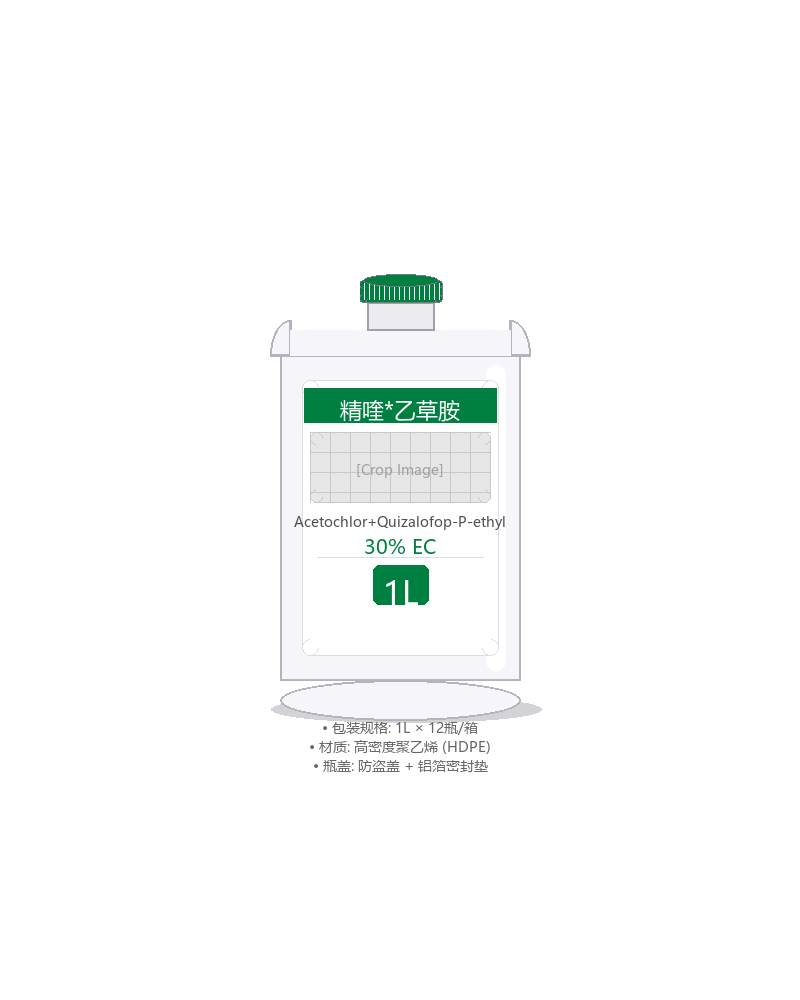
Quinquat* acetamiprid 30% emulsifiable concentrate
$0.00
Quizalofop* acetamiprid
Out of stock
Find more products
Description
Quinclorac·Acetochlor 30% Emulsifiable Concentrate
Quizalofop-P-ethyl + Acetochlor 30% EC
Active ingredients: Quinclorac + Acetochlor | Total active ingredient content: 30%
I. Product Profile
Jingquing·Acetochlor 30% Emulsifiable Concentrate is aDual-component broad-spectrum herbicide, byFangoxyphenoxypropionic acid-based foliar application herbicides (Quinclorac)andAmide-type pre-emergence soil herbicide (acetochlor)Scientifically formulated. This product offers dual ”pre-emergence + post-emergence” weed control, effectively suppressing pre-emergent weeds while also controlling post-emergent grass weeds, achieving a synergistic ”pre-emergence and post-emergence” effect. It is a highly effective solution for comprehensive weed management in broadleaf crop fields.
II. Mechanisms of action of active ingredients
Mechanism of dual-target synergy
forms
| Ingredients | Function Category | mechanism of action | Mechanism of action |
|---|---|---|---|
| quinquefoil (antifungal agent) | HRAC Class A / WSSA Class 1 | Acetyl-CoA carboxylase (ACCase) inhibitors, inhibits fatty acid synthesis | Absorbed by the stems and leaves, then transported in both directions to the growing points |
| also called dimethoate | HRAC Category K3 / WSSA Category 15 | Inhibitors of very-long-chain fatty acid (VLCFA) synthesis, interfering with cell membrane formation | Absorbed by young shoots, it is transported upward and inhibits growth |
The Principle of Synergy
-
Chloridation (Atrazine): A layer of pesticide-treated soil forms on the soil surface; after weed seeds germinate, the young shoots absorb the pesticide, which inhibits VLCFA synthesis and blocks cell membrane formation, preventing the weeds from emerging or causing them to die after emergence.
-
Foliar and Stem Control (Quinclorac): In the case of excavated grass weeds, after absorption through the stems and leaves, the active ingredient is transported in both directions, inhibiting ACCase activity and blocking fatty acid synthesis. This causes necrosis of the weed’s growing point, halting growth within 3 days and resulting in browning and death of the base within 7 days.
-
Synergy: Acetochlor compensates for the ineffectiveness of quinclorac against pre-emergent weeds; quinclorac compensates for acetochlor’s poor efficacy against post-emergent, mature weeds, thereby achieving weed control throughout the entire growth season.
III. Product characteristics
✅ Six Core Advantages
forms
| Specificities | particular |
|---|---|
| 🎯 One shot, one kill—two benefits in one | It provides both soil-applied and foliar control, effectively preventing both emerged and pre-emerged weeds. |
| 🔄 Broad-spectrum and highly effective, effectively controls both grass and broadleaf weeds | Highly effective against annual grass weeds, while also controlling some broadleaf weeds; its spectrum of activity far exceeds that of a single-ingredient product. |
| ⏱️ Long-lasting, saves labor and time | The residual efficacy under closed conditions lasts 30–40 days; treatment of stems and leaves produces rapid results and reduces the number of applications. |
| 🛡️ Safe for crops, highly selective | Highly safe for broadleaf crops, with high selectivity between grass weeds and broadleaf crops |
| 💧 Synergies, Cost Reduction, and Quality Improvement | Dual-target action reduces the risk of resistance, lowers the dosage, and enhances overall control efficacy |
| 🌾 Versatile and flexible solutions | Suitable for a variety of broadleaf crops, including soybeans, peanuts, cotton, rapeseed, watermelons, and chili peppers |
🎯 Preventing Objects
Primary prevention and eradication: Barnyard grass, crabgrass, foxtail grass, golden foxtail grass, cowgrass, wild millet, wild rye, thrush grass, thousand-gold grass, wild oats, shepherd’s purse, purslane, amaranth, smartweed, quinoa, and other annual grass weeds, as well as some broadleaf weeds.
Suitable crops: Broadleaf crops such as soybeans, peanuts, cotton, rapeseed, watermelons, chili peppers, sesame, potatoes, leafy vegetables, fruit trees, and seedlings.
IV. Usage and dosage
📋 Application Guidelines for Major Crops
forms
| Crop type | Application period | Dosage (formulated dose/acre) | water consumption | Mode of application |
|---|---|---|---|---|
| Soybean Field | After Seeding but Before Emergence, or Early Post-Emergence | 100-150 ml/acre | 30-50kg/mu | Soil application or foliar application |
| Peanut Field | After Seeding but Before Emergence, or Early Post-Emergence | 100-150 ml/acre | 30-50kg/mu | Soil application or foliar application |
| Cotton Field | After Seeding but Before Emergence, or Early Post-Emergence | 100-150 ml/acre | 30-50kg/mu | Soil application or foliar application |
| Rapeseed field | After transplanting healthy seedlings or after direct seeding in the field | 80–120 milliliters per mu | 30-50kg/mu | Foliar spray |
| Watermelon Field | Before or after transplanting (pre-emergence) | 100-150 ml/acre | 30-50kg/mu | Soil spraying |
| Chili Pepper Field | Before or after transplanting (pre-emergence) | 80–120 milliliters per mu | 30-50kg/mu | Soil spraying |
Dosage Instructions: Use the upper limit when soil organic matter content is high and weed density is high; use the lower limit for sandy soils with low organic matter content. Post-emergence applications should target grassy weeds3–5-leaf stageProceed as directed; if the grass is too mature, increase the dosage appropriately.
V. Guidance for use
🔧 Application Points
forms
| move | operational specification |
|---|---|
| 1. Pre-emergence application | After crops are sown but before they emerge, spray the soil surface evenly to form a complete soil-treatment layer. |
| 2. Stems and Leaves After Emergence | When grass weeds are in the 3- to 5-leaf stage, apply a directed spray to the stems and leaves of the weeds on a windless day. |
| 3. Soil Moisture | Pre-emergence application requires moist soil; during dry conditions, increase the amount of water added or mix the pesticide shallowly into the soil. |
| 4. Method of Dosing | Two-step dilution method: First, emulsify the chemical with a small amount of water, then add sufficient water. |
| 5. Spray Quality | When treating stems and leaves, ensure that the spray is applied evenly and thoroughly, so that the entire weed plant is covered by the spray solution. |
⚠️ Key Considerations
-
⏰ Grasp the application window: Pre-emergence applications must be made before weeds emerge; foliar applications should be applied when grass weeds3–5-leaf stage, and effectiveness decreases as the grass ages.
-
🚫 Contraindicated crops: This product contains acetochlor, which is effective againstWheat, corn, rice, sorghumThis product has a strong toxic effect on grass crops; drift of the spray onto nearby grass crops is strictly prohibited.
-
🌡️ Temperature effects: Applying the pesticide under high-temperature conditions (>30°C) may increase the risk of phytotoxicity; therefore, application should be avoided during the midday heat. Under low-temperature conditions, the pesticide takes longer to take effect.
-
💧 Soil conditions: For sandy soils and fields with low organic matter content, reduce the application rate slightly; for heavy clay soils and fields with high organic matter content, increase the application rate slightly.
-
🐟 Aquatic safety: This product is toxic to fish; apply it away from aquaculture areas. Do not wash application equipment in water bodies.
-
🧪 Mixing Taboo: not be associated withButyl 2,4-dichlorodiphenyl ether, 2-methyl-4-chlorideDo not mix with hormone-based herbicides (quinclorac and hormone-based herbicides have an antagonistic effect, which reduces efficacy).
-
🔄 Resistance management: Combination formulations can delay the development of resistance, but it is still recommended to rotate their use with herbicides that have different modes of action, limiting their use to no more than 1–2 times per season.
-
🛡️ security: When applying the pesticide, wear protective clothing, gloves, a mask, and goggles; wash your hands and face immediately after application; pregnant and breastfeeding women should avoid contact.
-
🧹 Instrument cleaning: Thoroughly clean the sprayer after use to prevent residual pesticide from causing phytotoxicity to subsequent sensitive crops.
-
📦 Storage conditions: Store in a cool, dry, well-ventilated place, away from direct sunlight and high temperatures; keep away from sources of fire and out of the reach of children.
Sixth, product specifications and packaging
forms
| sports event | parameters |
|---|---|
| Total active ingredient content | 30% (Quinclorac + Acetochlor) |
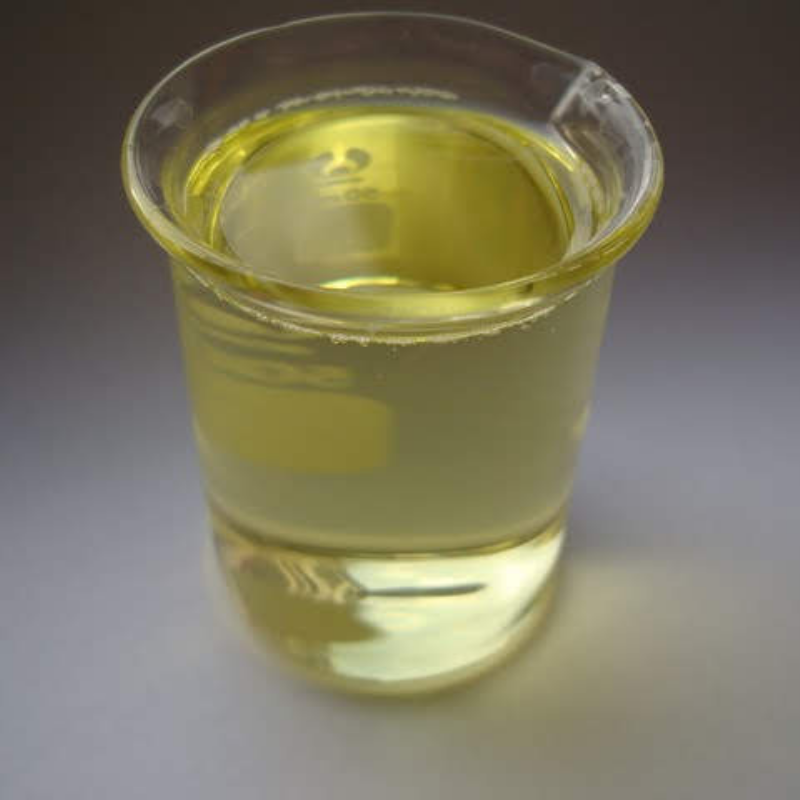
| exterior condition | Brownish yellow transparent liquid |
| pH value | 5.0-8.0 |
| Emulsion Stability | Diluted 200 times to meet FAO standards |
| Packaging specification | 100 mL × 50 bottles per case, 200 mL × 40 bottles per case, 500 mL × 20 bottles per case, 5 L × 4 buckets per case |
| date of use (on foodstuffs) | 2 years |
Warm Tip: For specific application, please use under the guidance of local plant protection department and adjust the dosing program appropriately according to local weed communities, soil types and climatic conditions.

Reviews
There are no reviews yet.