
Description
Diethylammonium chloride
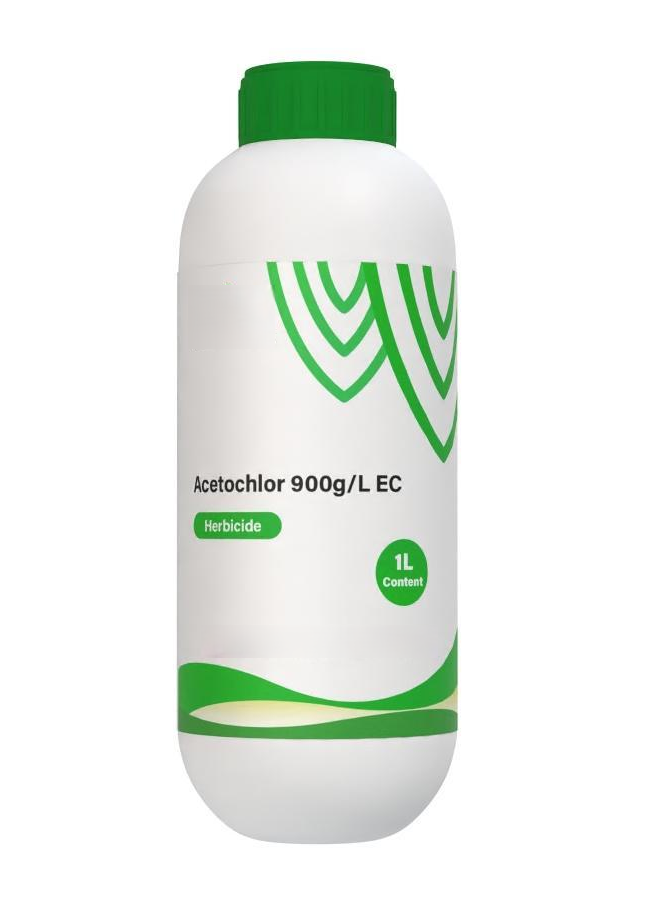
Generic Name: Acetochlor Emulsifiable Concentrate
Dosage Form and Strength: 900 grams per liter of emulsifiable concentrate (EC)
English Name: Acetochlor 900 g/L EC
Product Category: Selective pre-emergence herbicides
Product Overview
Acetochlor is an amide-type selective herbicide primarily used for pre-emergence soil-applied weed control in dryland crops such as corn, soybeans, peanuts, and cotton. When applied to the soil, the product forms a protective film that effectively controls annual grass weeds and certain broadleaf weeds.
Suitable for large-scale crop management in modern agriculture, it can significantly reduce the cost of manual weeding, improve crop uniformity, and enhance field management efficiency.
Mechanism of Action of Active Ingredients
Atrazine is primarily absorbed through the young shoots and roots of weeds; during weed germination, it inhibits protein synthesis and cell division, thereby hindering the normal growth of weed seedlings.
Its functional characteristics include:
- Inhibits the elongation of young weed shoots
- Interferes with fatty acid and protein synthesis
- Prevents weeds from emerging normally
- Provides excellent control of newly emerging weeds
Acetochlor is a pre-emergence soil-applied herbicide that is less effective against large weeds that have already emerged; therefore, it is recommended to apply the herbicide before weeds emerge.
Product Features
1. Excellent weed control through canopy closure
It is highly effective against annual grass weeds, including:
- Weeds
- Foxtail Grass
- Matang
- Cow's-tail Grass
- Wild Oats
It also controls certain broadleaf weeds.
2. Long-lasting
After application, the herbicide forms a stable film on the soil surface, with residual efficacy generally lasting 30–50 days, effectively reducing the recurrence of weeds.
3. Suitable for a wide range of crops
Can be widely used in:
- maize
- soybeans
- Peanuts
- wool
- Sugarcane
- Dryland crops such as rapeseed
4. Flexible to Use
It can be used as a single application or mixed with other herbicides to broaden the spectrum of broadleaf weed control.
5. Reduce labor costs
A single application effectively controls early-season weeds, significantly reducing the number of manual weeding sessions, making it suitable for large-scale cultivation.
Dosage
| crop | prevention and treatment target | Recommended Dosage | Period of Use | Instructions for Use |
| Cornfield | Annual grass weeds | 100-150 ml/acre | post-sowing before seedling | Soil spraying |
| Soybean Field | Grass weeds and some broadleaf weeds | 120–180 milliliters per mu | post-sowing before seedling | mist evenly |
| Peanut Field | barnyard grass, crabgrass, etc. | 100-150 ml/acre | post-sowing before seedling | Soil Treatment |
| Cotton Field | Annual weeds | 120–200 milliliters per mu | post-sowing before seedling | Enclosed Spray |
The actual application rate should be adjusted based on soil type, soil moisture conditions, weed density, and local plant protection requirements.
Guidelines for use
Application Recommendations
- It is recommended to apply the herbicide after sowing and before weeds emerge.
- Keeping the soil moderately moist helps the pesticide work effectively.
- Spray evenly to ensure a complete film of the pesticide forms on the soil surface.
Important Notes
- Under drought conditions, shallow soil mixing is recommended to improve the stability of pesticide efficacy.
- Avoid overspray and missed spots
- For sandy soil, the application rate should be reduced appropriately.
- Use with caution before and after heavy rain to prevent phytotoxicity.
Safety Distances and Protective Measures
- Protective gear should be worn when applying the pesticide.
- Avoid contact with skin and eyes
- Apply the medication away from aquaculture areas
- Clean the application equipment promptly after use.
Product Use Cases
- Large-scale Field Cropping
- High-Efficiency Pre-emergence Weed Control for Corn and Soybeans
- Centralized Plant Protection Management in Agricultural Cooperatives
- Cost-Effective and Efficient Agricultural Production

Reviews
There are no reviews yet.