
Description
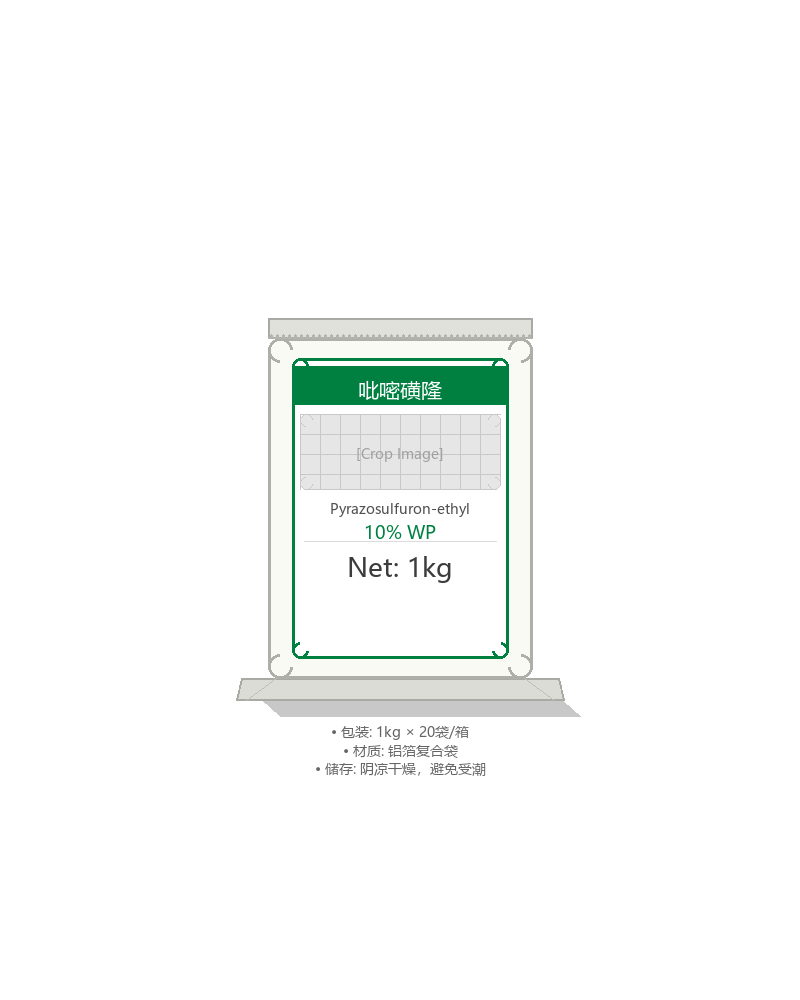
Pyrimidylsulfuron 10% Wettable Powder
Pyrazosulfuron-ethyl 10% WP
CAS number: 93697-74-6 | Chemical Name: Ethyl 5-(4,6-dimethoxypyrimidin-2-ylcarbamoylsulfonyl)-1-methylpyrazole-4-carboxylate
I. Product Profile
Pyrimidylsulfuron 10% Wettable Powder is aClassic Selective Systemic Herbicides for Rice Fields, a sulfonylurea herbicide. This product is primarily absorbed through the root system, rapidly translocates within the weed plant, inhibits growth, and causes the weeds to gradually die. It provides excellent control of annual and perennial broadleaf weeds and Cyperaceae weeds in rice fields. As a staple product for controlling broadleaf and Cyperaceae weeds in rice fields, it offers consistent efficacy, high safety, a long history of use, and widely verified results.
II. Mechanisms of action of active ingredients
Target: Acetyl-L-lactate synthase (ALS) inhibitor
forms
| active link | Specific mechanisms |
|---|---|
| absorption pathway | Mainly throughRoots Absorbed, and is rapidly transported within the weed plants |
| biochemical target | Inhibiting the activity of acetyl-L-lactate synthase (ALS), inhibiting the synthesis of branched-chain amino acids |
| physiological effect | Inhibits the biosynthesis of valine, leucine, and isoleucine, and prevents cell division |
| final performance | Weed growth is stunted, and the plants gradually turn yellow and die. |
selectivity principle (physics)
-
Rice can break down this pesticide, which has virtually no effect on rice growth.
-
Stable efficacy, high safety, and long-lasting effect25–35 days
-
It degrades relatively quickly in the soil and is safe for subsequent crops.
III. Product characteristics
✅ Six Core Advantages
forms
| Specificities | particular |
|---|---|
| 🎯 Specialized in Kosa, with a wide range of target plants | Provides excellent control of annual and perennial broadleaf weeds and sedge weeds |
| 🔄 Systemic action, thoroughly eradicates | Once absorbed by the root system, the herbicide is rapidly transported throughout the plant, destroying weeds from the inside out, with no regrowth. |
| ⏱️ Long-lasting, one application lasts | Effective for 25–35 days; a single application is sufficient to control weeds during the seedling stage of rice. |
| 🛡️ Safe for rice, suitable for subsequent crops | It is safe for rice, degrades rapidly in the soil, and is safe for subsequent crops |
| 💧 Classic formula, consistent results | The 10% classic formulation has a long history of use, and its effectiveness has been widely proven. |
| 🌾 Versatile and adaptable | Can be applied as a soil treatment or mixed with water for spraying; suitable for various cultivation methods, including transplanting, direct seeding, and broadcasting. |
🎯 Preventing Objects
Primary prevention and eradication: Annual and perennial broadleaf weeds and Cyperaceae weeds, such as heterostylous sedge, water sedge, fireweed, duckbill, water celery, jointed water plantain, wild arrowhead, water milfoil, duckweed, and water hyssop.
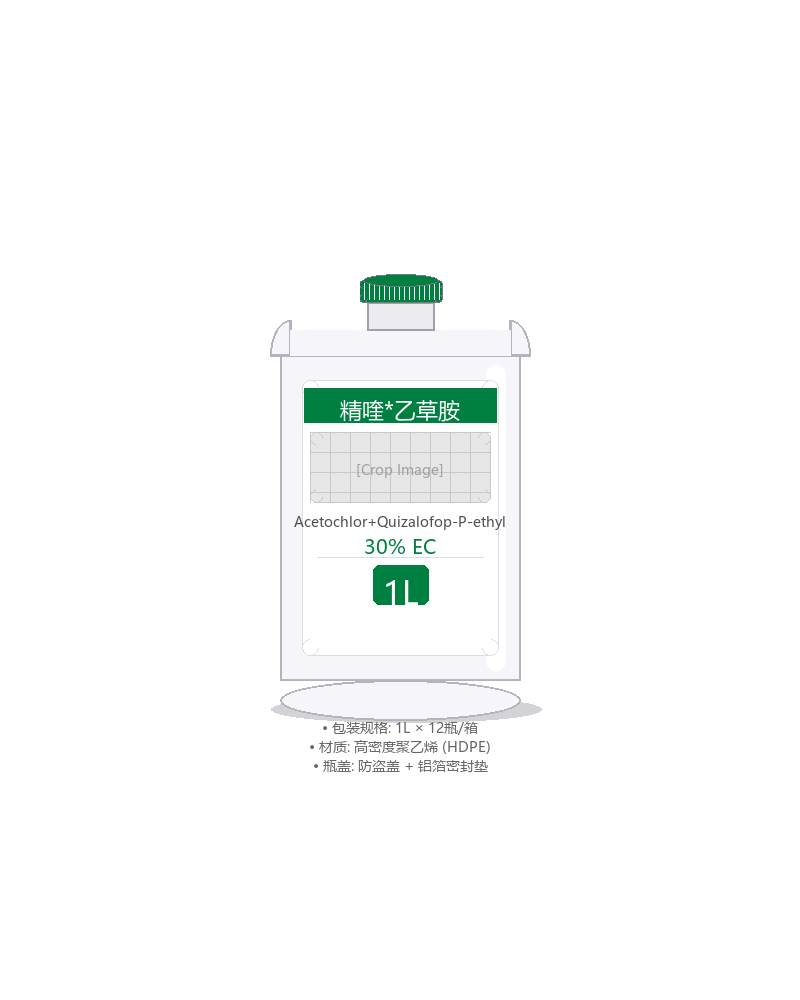
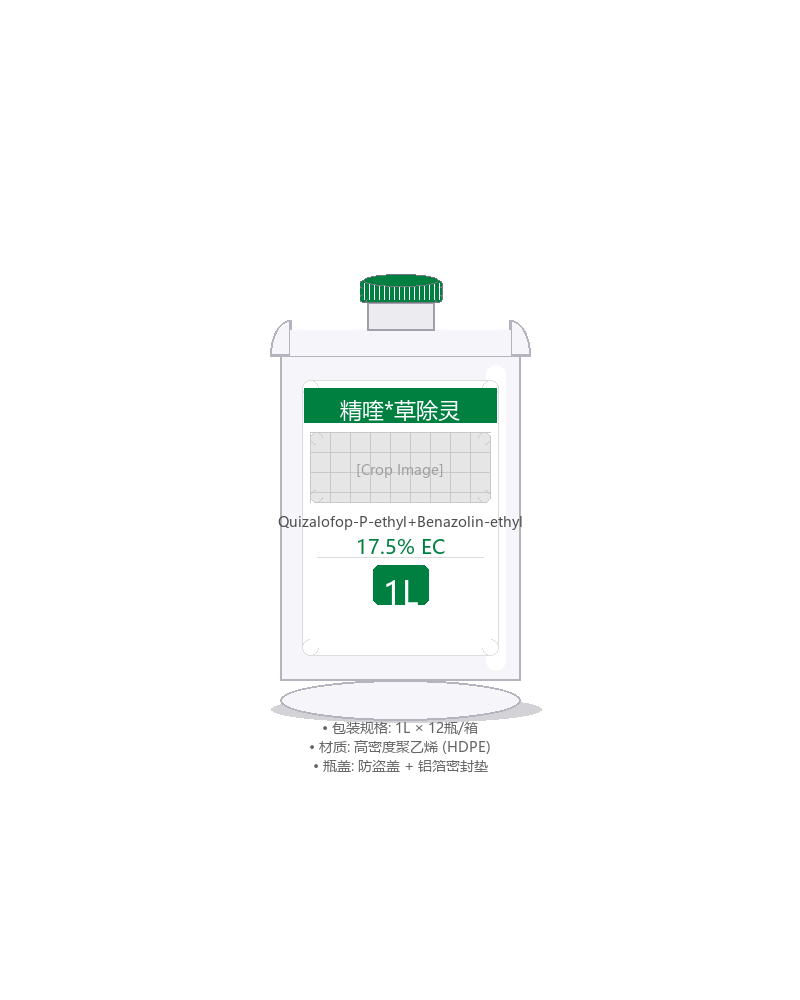
Not effective against the following weeds: Grass weeds such as barnyard grass and common barnyard grass (for barnyard grass at the two-leaf stage or later, this product is highly ineffective when used alone and must be mixed with dichlorquinoleic acid or Grass-Killer).
IV. Usage and dosage
📋 Rice field use program
forms
| Crop type | Application period | Dosage (formulated dose/acre) | water consumption | Mode of application |
|---|---|---|---|---|
| Rice seedling beds/direct-seeding fields | Rice at the 1–3-leaf stage (3–20 days after transplanting) | 15–30 grams per mu | 30 kilograms per mu | Apply by mixing with toxic soil and spreading or spraying |
| Rice transplanting field | 3–20 days after transplanting | 20–30 grams per mu | 30 kilograms per mu | Apply by mixing with toxic soil and spreading or spraying |
| Rice Fields with Transplanted Seedlings | 3–6 days after transplanting (before barnyard grass reaches the 1-leaf-1-heart stage) | 15–30 grams per mu | 30 kilograms per mu | Spreading the soil mixed with poison |
| Dry-seeded fields | Rice at the 1–3-leaf stage | 15–30 grams per mu | 30 kilograms per mu | Spray, then flood-irrigate once 1–2 days after application |
Active ingredient dosage: The active ingredient dosage per mu for 10% pyrimidylsulfuron is 1.5–3 grams per mu。
V. Guidance for use
🔧 Application Points
forms
| move | operational specification |
|---|---|
| 1. Seize the opportunity | Apply the herbicide when rice is in the 1–3-leaf stage or 3–20 days after transplanting; it is most effective during the early stages of weed emergence. |
| 2. Aquifer management | Maintain a water depth of 3–5 cm during application, and keep the field flooded for 3–5 days (direct-seeding fields) or 5–7 days (transplanted fields) after application. |
| 3. Dispensing methods | Using the two-step dilution method, first thoroughly disperse the chemical in a small amount of water, then add sufficient water. |
| 4. Poisonous soil method | Mix the formulation with 20 kilograms of fine, moist soil per mu, and apply evenly after the morning dew has dried. |
| 5. Spraying | Mix 30 kilograms per mu with water and spray evenly to ensure complete coverage of the weeds. |
⚠️ Key Considerations
-
⏰ Optimal application period: maize1–3-leaf stageThe best results are achieved when the pesticide is applied 3–20 days after transplanting; in dry-seeded fields, flood irrigation should be performed once 1–2 days after application, and the soil should be kept moist.
-
🚫 Contraindications: 对Barnyard grass and thousand-gold seed are ineffective, in fields where barnyard grass is the dominant weed, this product should be mixed with dichloroquinoline acid or a special grass-control mixture; as late-season rice varieties (japonica and glutinous rice) are relatively sensitive to this product, application during the budding stage of late-season rice should be avoided whenever possible.
-
💧 Water Management: Maintain a water depth of 3–5 cm during application, and keep the field watered for 3–5 days (direct-seeded fields) or 5–7 days (transplanted fields) after application. For dry-seeded fields, flood-irrigate once 1–2 days after application and keep the soil moist.
-
🌡️ Temperature effects: The drug's efficacy is stable and is minimally affected by temperature.
-
🐟 Aquatic safety: It is low in toxicity to fish, birds, and bees, but caution is still advised in rice paddies where fish are raised.
-
🧪 Blending recommendations: When used alone, it is very ineffective against barnyard grass at the two-leaf stage or later; it is often combined withHecaote or dichloroquinoline acidWhen used in combination, they provide excellent protection.
-
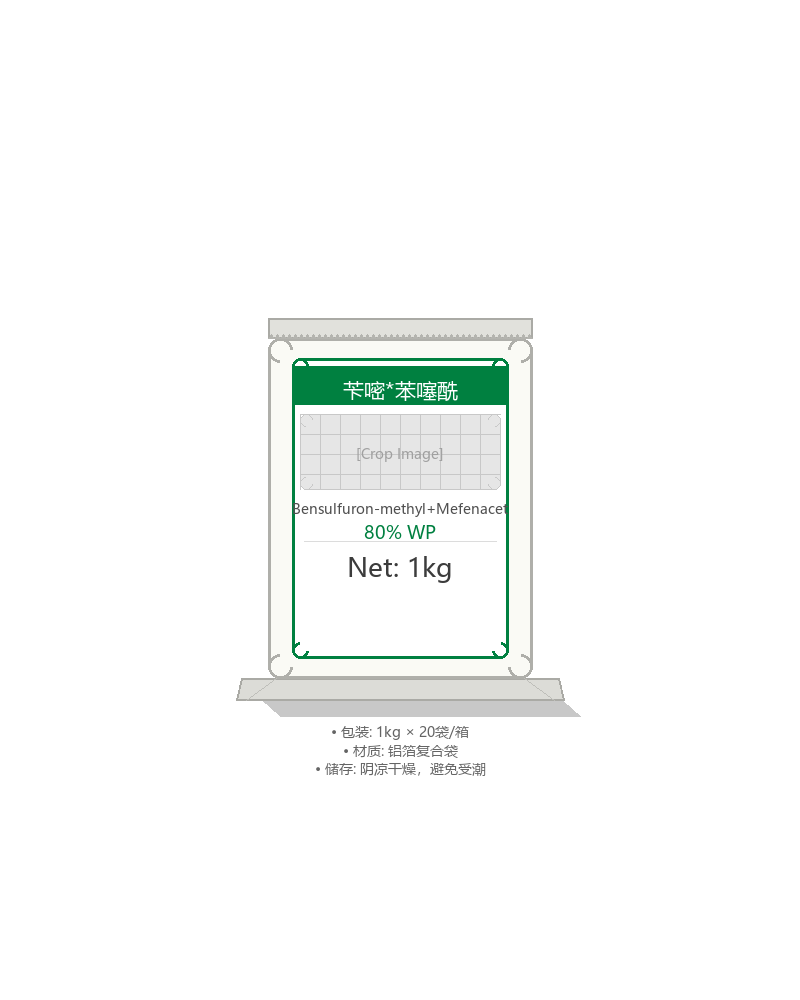
🔄 Resistance management: Long-term single use is prone to resistance, it is recommended to combine withBenzylsulfuron, PentafluorophenoxanilRotate the use of herbicides with different modes of action.
-
🛡️ security: Wear protective clothing, gloves, and a mask when applying the pesticide; wash your hands and face immediately after application; pregnant and breastfeeding women should avoid contact.
-
🧹 Instrument cleaning: Thoroughly clean the sprayer after use to prevent residual pesticide from causing phytotoxicity to other crops.
-
📦 Storage conditions: Store in a cool, dry, well-ventilated place, away from direct sunlight and high temperatures; keep away from sources of fire and out of the reach of children.
Sixth, product specifications and packaging
forms
| sports event | parameters |
|---|---|
| Active ingredient content | Pyrimidinesulfuron ≥10% |
| exterior condition | White to pale yellow powder |
| Suspension rate | ≥70% |
| Wetting time | ≤120 seconds |
| Packaging specification | 10 g × 100 bags/case, 15 g × 100 bags/case, 25 g × 200 bags/case, 50 g × 100 bags/case |
| date of use (on foodstuffs) | 2 years |
Warm Tip: When applying this product, please follow the guidance of your local plant protection authorities and adjust the application plan as appropriate based on local weed communities, cultivation practices, and climatic conditions.

Reviews
There are no reviews yet.