
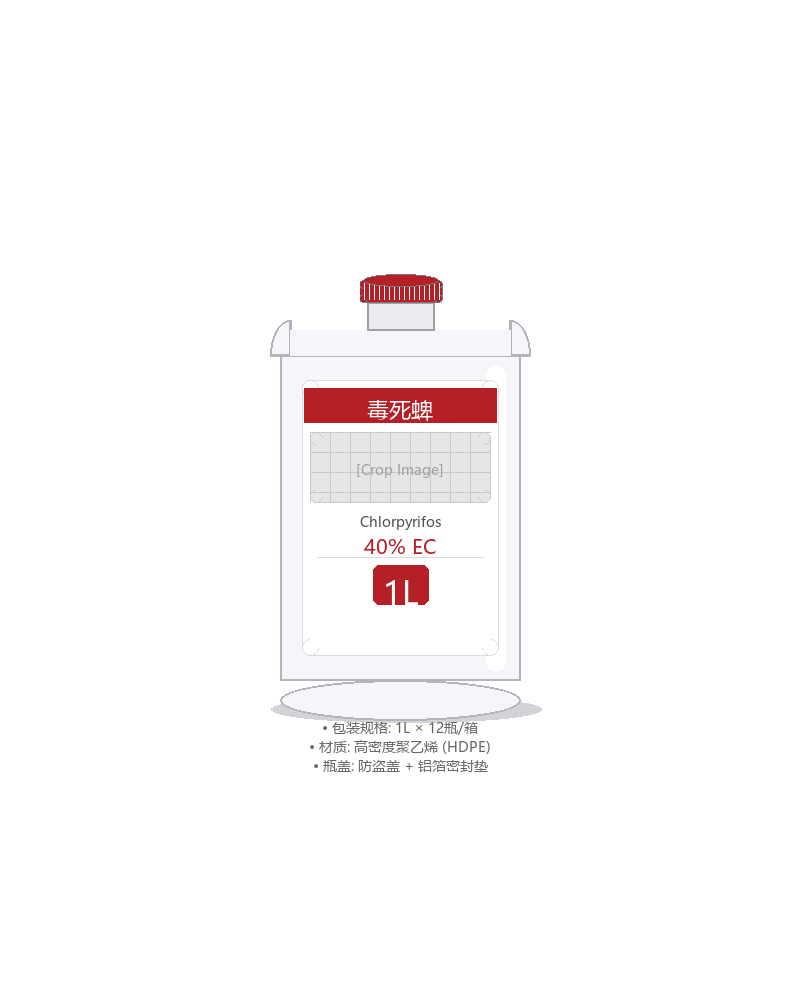
Chlorpyrifos 40% emulsifiable concentrate
$0.00
chlorpyrifos (chlorpyrifos)
Out of stock
Find more products
Description
Diethylammonium chloride
Chlorpyrifos 40% emulsifiable concentrate
Chlorpyrifos 40% EC
Chlorpyrifos 40% EC
Mechanism of action of the active ingredient
Chlorpyrifos genusorganophosphorusBroad-spectrum insecticides that work by inhibiting pests' internalAcetylcholinesterase (AChE)It acts by blocking the normal hydrolysis of the neurotransmitter acetylcholine, resulting in the sustained transmission of nerve impulses, which rapidly causes pests to become excited, experience convulsions, become paralyzed, and die. It also possesses strongTouch, stomach and fumigationIt acts through three mechanisms; while it is not systemic, it has strong penetrating power, able to penetrate the waxy layer of leaves and the exoskeletons of pests, making it equally effective against hidden and subterranean pests. It binds strongly to organic matter in the soil, significantly extending its residual efficacy against subterranean pests.
Product Features
forms
| Specificities | Instructions |
|---|---|
| Triple Action | Contact, stomach, and fumigation—multiple modes of action for comprehensive control of above-ground, below-ground, and hidden pests |
| Broad-spectrum and highly effective | Effective against Lepidoptera, Coleoptera, Hemiptera, and mites; a single application can control multiple pests. |
| Long-lasting soil retention | It has a long residual effect in the soil and is highly effective against soil-dwelling pests such as wireworms, grubs, and cutworms. |
| Highly permeable | Penetrates plant cuticles and insect exoskeletons, thoroughly eliminating borers and pests hiding on the undersides of leaves |
| Replace highly toxic | As a primary substitute for highly toxic pesticides such as methamidophos, it has moderate toxicity and offers greater safety than traditional organophosphate pesticides. |
Dosage
forms
| Applicable crops | prevention and treatment target | Preparation dosage | dilution factor | Application method |
|---|---|---|---|---|
| maize | Second-generation rice stem borer, third-generation rice stem borer, rice leaf roller | 75–100 mL per mu | 1000-1500 times | mist evenly |
| maize | Rice leafhoppers, rice gall midges | 50–80 mL per mu | 1000-1500 times | mist evenly |
| wool | Cotton bollworm, red bollworm | 60–70 mL per mu | 1000-1500 times | mist evenly |
| wool | Cotton aphids, red spider mites | 45–60 mL per mu | 1500-2000 times | mist evenly |
| Vegetables (Cabbage) | Cabbage looper, diamondback moth, and diamondback moth | 50–60 mL per mu | 1500-2000 times | mist evenly |
| Fruit Trees (Apple/Citrus) | Peach fruit borers, leafminers, and woolly aphids | 1000-2000 times | — | mist evenly |
| Chives/Garlic | Chive maggots, root maggots | 800–1,000 times | — | Root Watering |
Guidelines for use
-
Optimal application period: For leafrollers, apply pesticide during the peak egg-hatching period and before the young larvae begin boring into the stems; for aphids, apply pesticide at the onset of their peak population; for soil-dwelling pests, treat the soil before sowing or transplanting.
-
Spraying Points: When applying pesticides to rice, maintain a shallow water layer of 2–3 centimeters in the field; when spraying vegetables, ensure even coverage of both sides of the leaves and the terminal leaves; when spraying fruit trees, focus on covering the fruit and new shoots.
-
mixing taboo:Do not mix with alkaline pesticides(such as Bordeaux mixture and lime-sulfur solution) to prevent them from breaking down and losing their effectiveness.
-
sensitive crops:: ForTobacco, Tomato, and Cucurbit Seedlings, and Lettuce SeedlingsSensitive; use is strictly prohibited or should be used with caution.
-
safety interval: Rice—15 days; cotton—21 days; vegetables—7 days; apples—30 days; citrus—28 days; maximum number of applications per season: rice—2 times; cotton—4 times; vegetables—3 times.
-
environmental safety: Toxic to bees, fish, silkworms, and aquatic organisms; do not use near nectar-producing crops during their flowering period, silkworm rearing facilities, or mulberry groves; do not wash application equipment in water bodies such as rivers and ponds.

Reviews
There are no reviews yet.