

Cypermethrin* chlorpyrifos 550 g/l emulsifiable concentrate
$0.00
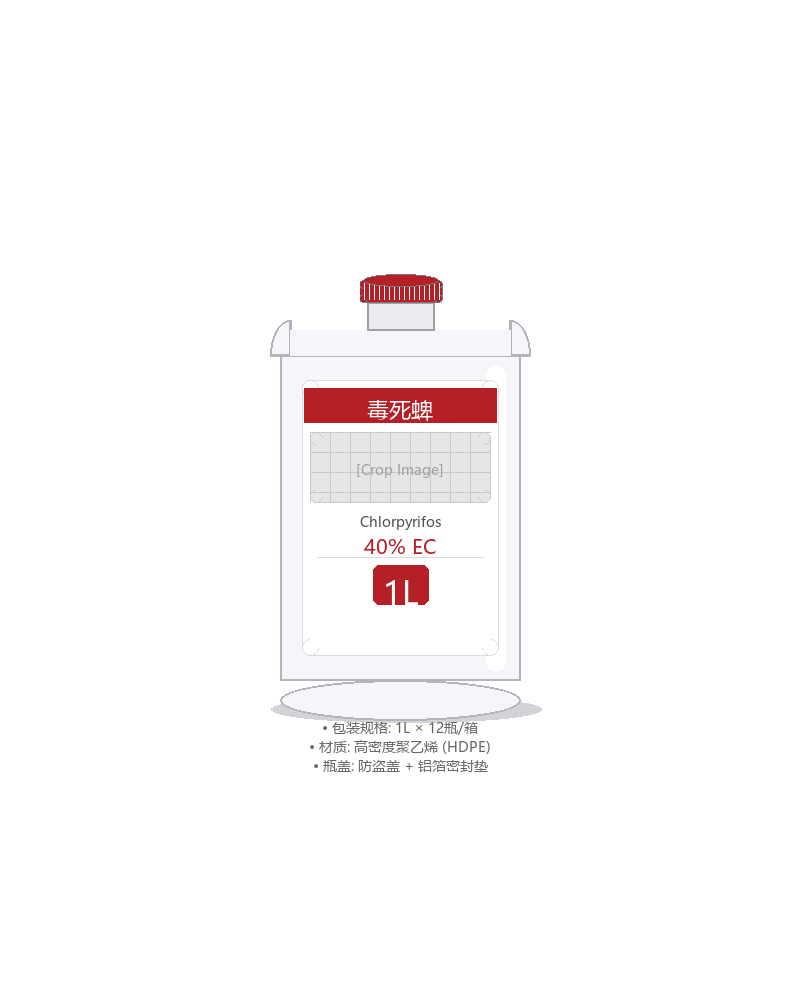
Chlorpyrifos*
Out of stock
Find more products
Description
Chlorpyrifos·Dimethoate 550 g/L Emulsifiable Concentrate
I. Product name
Chlorpyrifos·Dimethoate 550 g/L Emulsifiable Concentrate
Cypermethrin · Chlorpyrifos 550 g/L EC
Active ingredient content: Cypermethrin 50 g/L + Chlorpyrifos 500 g/L
delivery mechanism of a medicine (e.g. pill, powder etc): Emulsifiable Concentrate (EC)
norm: 100 mL / 500 mL / 1 L / 5 L / 20 L
Cypermethrin · Chlorpyrifos 550 g/L EC
Active ingredient content: Cypermethrin 50 g/L + Chlorpyrifos 500 g/L
delivery mechanism of a medicine (e.g. pill, powder etc): Emulsifiable Concentrate (EC)
norm: 100 mL / 500 mL / 1 L / 5 L / 20 L
II. Mechanisms of action of active ingredients
Pyrethroid + Organophosphate: Dual-pathway neurotoxins with synergistic effects
| active ingredient | Function Category | Targets and Mechanisms of Action |
|---|---|---|
| Cypermethrin | Type II pyrethroids | Acts on insect neuronsVoltage-gated sodium channels...delays the closure of sodium channels, causing sustained depolarization of nerve cells, which leads to hyperexcitability, convulsions, paralysis, and death; it has potent contact and stomach toxicity, as well as a rapid knockdown effect |
| chlorpyrifos (chlorpyrifos) | organophosphorus | InhibitionAcetylcholinesterase (AChE)... by inhibiting the hydrolysis of the neurotransmitter acetylcholine, causing acetylcholine to accumulate in the synaptic cleft and continuously stimulating cholinergic neurons, leading to respiratory failure and death in pests; it has a triple action: contact, stomach, and fumigant effects |
Coordination Mechanism: Cypermethrin provides rapid knockdown and repellent effects, while fipronil offers deep systemic penetration and sustained control; when mixed, the two significantly broaden the spectrum of insecticidal activity and help overcome resistance to single-ingredient formulations.
III. Product characteristics
-
Dual-Mechanism Complementarity: Pyrethroid-based rapid knockdown + organophosphate-based sustained control, providing rapid and thorough pest suppression
-
Extremely broad spectrum of insecticidal activity: Highly effective against Lepidoptera (cotton bollworm, cabbage looper), Coleoptera (soil-dwelling pests), and Homoptera (aphids, planthoppers)
-
Highly permeable: Emulsifiable concentrates spread well on plant surfaces, penetrate the cuticle of leaves, and are effective against hidden pests.
-
Special Effects for Soil Pests: Dicofol is highly effective against soil-dwelling pests such as wireworms, golden wireworms, and cutworms, and is suitable for seed treatment or soil application.
-
Moderate shelf life: Remains effective in the soil for 14–21 days and on plant surfaces for 7–10 days, combining both fast-acting and long-lasting effects
-
Antibiotic Resistance Management: A combination of two different modes of action effectively delays the development of resistance, making it suitable for use in areas with resistant pests.
IV. Usage and dosage
Applicable crops: Cotton, rice, wheat, corn, cabbage, cauliflower, apples, citrus fruits, root crops (peanuts, potatoes)
| prevention and treatment target | Applicable crops | dilution factor | Application Rate (Amount of Formulation per Mu) | Application method |
|---|---|---|---|---|
| Cotton bollworm, red bollworm | wool | 800–1,200 times | 50–80 mL | Spraying (from peak egg-laying period until before the third instar) |
| Aphids, Cotton Aphids | Cotton, Vegetables | 1,500–2,000 times | 30–50 mL | Spray |
| Rice Leafroller, Two-Generation Rice Borer | maize | 1,000–1,500 times | 50–70 mL | Spray |
| Wireworms, Golden Wireworms, Cutworms | Peanuts, Potatoes | 800–1,000 times | 80–100 mL | Soil spraying or root drenching |
| Peach fruit borer, Pear fruit borer | Fruit Trees | 1,500–2,000 times | 40–60 mL | Spraying (when the ovary-to-fruit ratio is 1%) |
Method of application: Apply a uniform spray during the early life stages of pests. To control soil-dwelling pests, dilute the pesticide solution with water and apply it by digging trenches to drench the roots, or spray the soil before sowing.
V. Guidance for use
✅ Best Time to Apply Pesticides
-
cotton bollworm: Apply the pesticide during the peak egg-hatching period through the 1st–3rd instar larval stage, focusing on spraying the tender leaves at the tops of cotton plants, buds, bolls, and the tips of plant clusters.
-
Soil Pests: Apply the pesticide before sowing or during the seedling stage; for soil treatment, ensure even coverage of the pesticide in a 10–15 cm layer of soil.
-
Aphids: Apply the pesticide during the spot-forming stage or before leaf curling, taking care to spray the undersides of the leaves.
✅ Mixing Pesticides and Spraying
-
secondary dilution: First, prepare a stock solution using a small amount of water, then add a sufficient amount of water (30–50 L per mu; double the amount of water for soil treatment).
-
Soil Treatment: To control soil-dwelling pests, mix the pesticide thoroughly with 20–30 kg of fine soil, spread the mixture over the soil, and then lightly cultivate the soil to incorporate it.
-
Precautions for Mixing: Can be mixed with most acidic and neutral pesticides, but avoid mixing with alkaline substances (Bordeaux mixture, lime-sulfur mixture)
⚠️ Notes
-
safety interval: Cotton—21 days; rice—21 days; vegetables—10 days; fruit trees—21 days
-
Highly Toxic Aquatic Organisms: Extremely toxic to fish, shrimp, and crabs; use is strictly prohibited in aquaculture areas and rice paddies where fish and shrimp are raised; after application, water from the field must not be discharged into fish ponds.
-
Highly Toxic to Bees: Do not use on flowering crops during the flowering period; relocate beehives or avoid the nectar flow period before application.
-
Toxicity Warning: Chlorpyrifos is a moderately toxic organophosphate; operators must take strict protective measures to avoid skin contact and inhalation.
-
Resistance management: Use no more than twice per growing season; it is recommended to rotate with biological or newer-generation pesticides such as Bacillus thuringiensis (Bt) and chlorantraniliprole.
-
Crop Sensitivity: Some cucurbit crops (cucumbers, watermelons) may be sensitive to emulsifiable concentrates during the seedling stage; it is recommended to reduce the concentration or avoid application during the seedling stage.
-
Detox Preparation: Organophosphate poisoning can be treated with atropine and pralidoxime; first-aid supplies must be available at the application site.
Reviews
There are no reviews yet.